
300MW Wasteland-based PV Ground-mounted System | Shaanxi, China
February 04, 2026
1. Project Overview
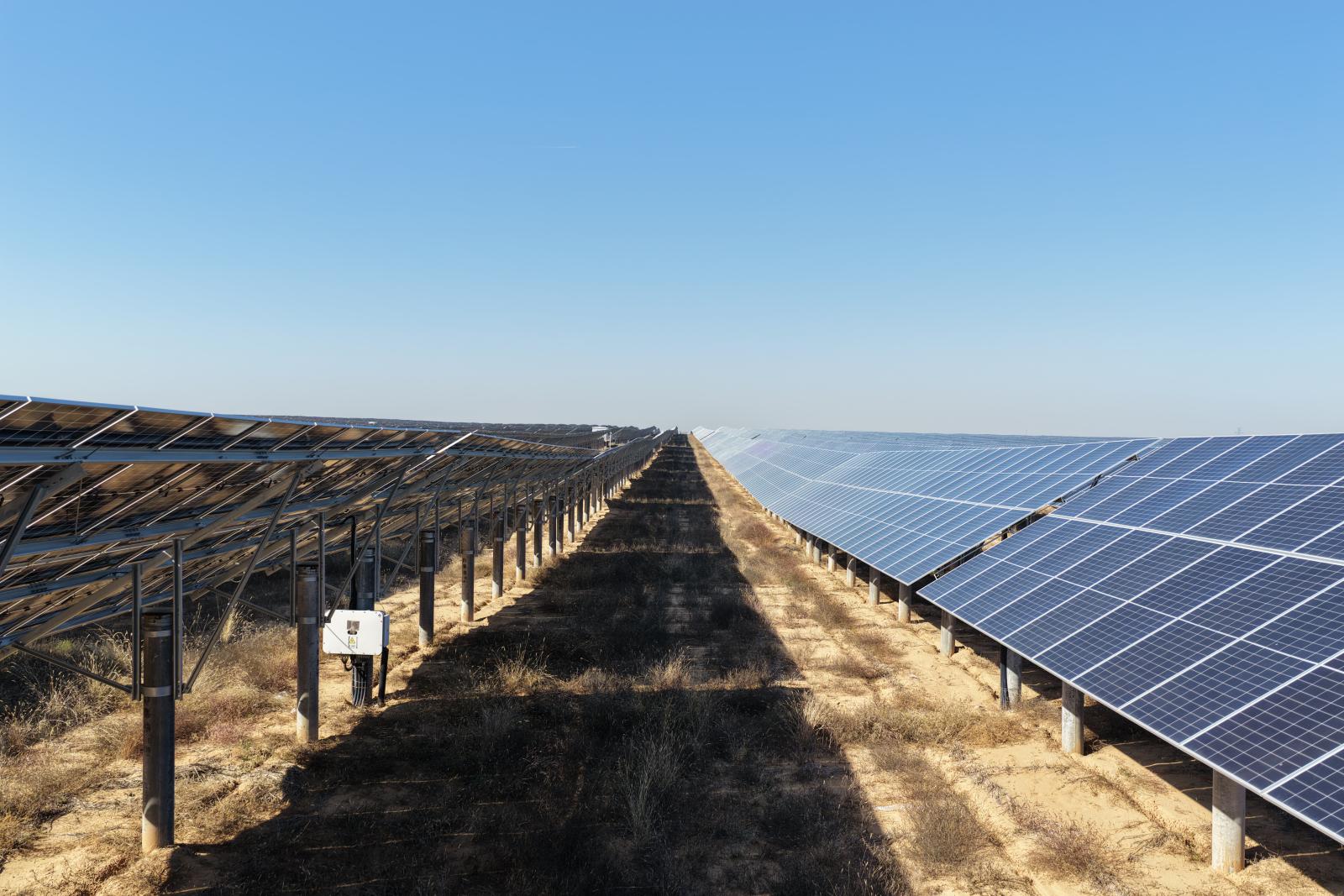
•Project Background:Located in Shaanxi Province, at the southern edge of the Mu Us Desert, this project is invested in and developed by Beiyuan Group. It is a benchmark project responding to China’s national strategy of promoting “PV + ecological restoration” in northwestern regions. Through the construction of a large-scale photovoltaic power plant, the project explores and implements an integrated development model that combines clean energy generation, desertification control, and ecosystem restoration in ecologically fragile areas. It provides a replicable technical pathway for comprehensive “PV+” utilization in desert regions across China.
•Project Requirements:Situated in a typical desert environment, the client’s core requirement was to develop a large-scale PV power plant capable of long-term resistance to wind and sand erosion, stable operation under harsh climatic conditions, and simultaneous ecological restoration. Specifically, the PV mounting solution was required to: (1) Deliver exceptional wind and sand resistance and long-term structural durability under frequent sandstorm conditions. (2) Enable scientifically designed array spacing and elevation to support vegetation restoration beneath the modules, realizing the concept of “power generation above, ecological restoration below.” (3) Adapt to desert terrain while ensuring constructability, cost efficiency, and long-term reliability at utility scale.
 2. Project Challenges
2.1 Durability and Stability under Frequent Wind and Sand Exposure
• The Desert experiences frequent wind and sand activity, subjecting the PV mounting system to continuous abrasion and wind pressure. The system must therefore exhibit outstanding wind-load resistance and erosion durability to ensure structural safety and operational stability throughout its lifecycle.
2.2 Coordinated Ecological Restoration in a Fragile Environment
• As the site is ecologically vulnerable, PV development must not compromise environmental integrity. Instead, the power plant must function as a carrier for ecological restoration. This requires mounting designs that preserve adequate space and light conditions beneath the modules to support sand-fixing vegetation and sustainable land rehabilitation.
2.3 Engineering Adaptability to Sandy Geology and Extreme Climate
• Sandy soil foundations have relatively low bearing capacity and stability. In addition, the site must withstand a design wind pressure of 0.33 kN/m² and a snow load of 0.24 kN/m². The mounting system and foundation must therefore demonstrate strong adaptability to desert terrain, uneven settlement, and extreme meteorological loads.
 3. Solution
Antaisolar delivered a customized, integrated solution centered on the ALTIMA-GROUND ST PHC fixed mounting system, focusing on wind resistance, sand stabilization, ecological synergy, and long-term reliability.
3.1 Wind and Sand Mitigation: Reinforced Structural and Durability Design
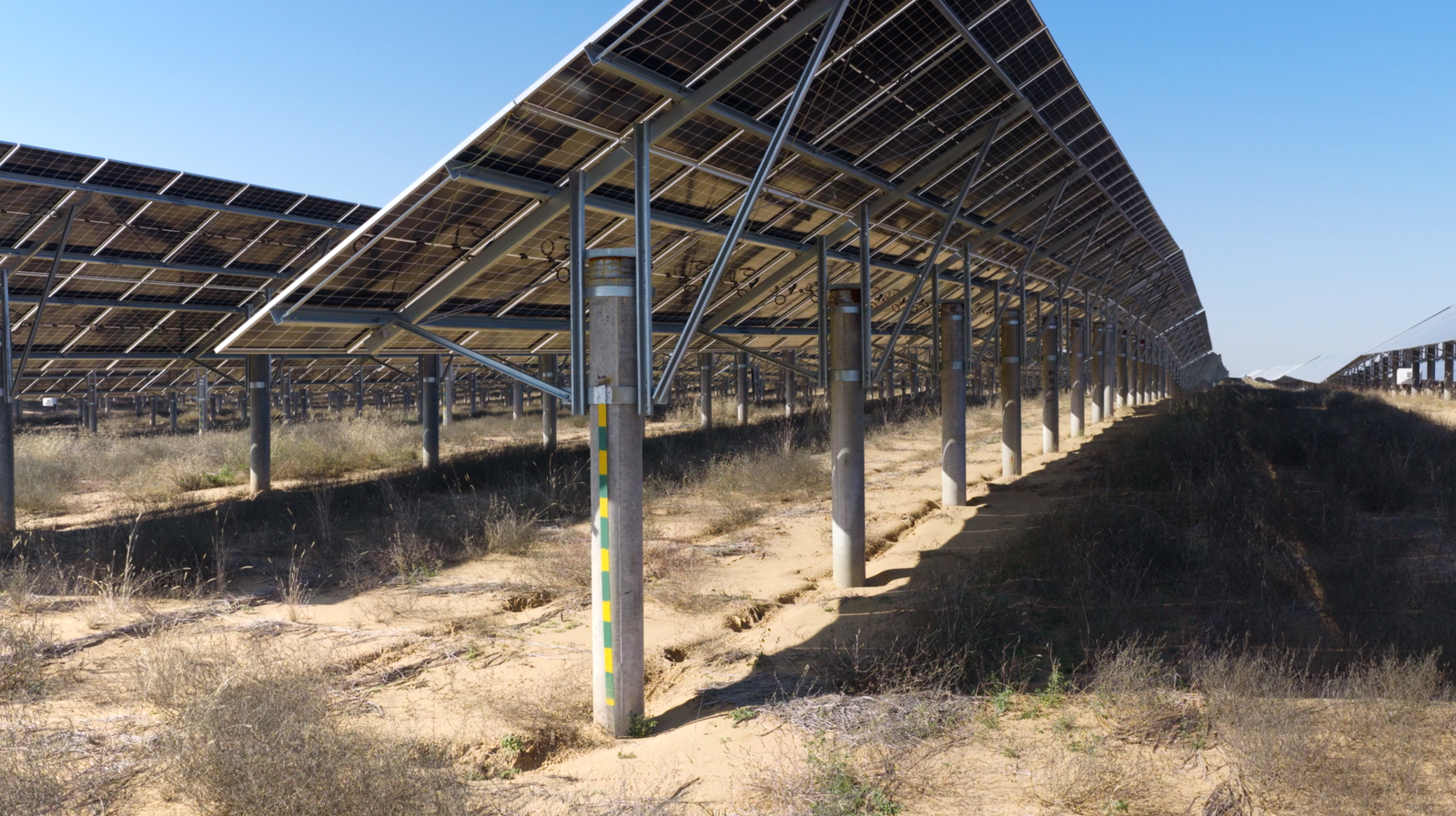
• Robust foundation: The project adopts PHC prestressed precast concrete pipe piles as foundations. With deep embedment in sandy soil, these piles provide strong anchorage and uplift resistance, ensuring overall structural stability at the foundation level.
• Reinforced connections: A dual-clam p connection system is used between the columns and PHC piles. This design offers high structural integrity while enabling convenient vertical height adjustment, effectively compensating for potential elevation deviations during desert construction and ensuring installation accuracy and system rigidity.
• High-strength structure: The upper mounting structure is fabricated from high-strength structural steel and reinforced according to site-specific wind and snow loads, ensuring safety under extreme weather conditions.
3.2 Ecological Restoration: Refined Spatial and Layout Design
• Optimized ground clearance: The minimum module clearance is uniformly set at 2.0 meters above ground. This height ensures effective ventilation and heat dissipation beneath the array to optimize module performance, while providing ample space for planting drought-resistant shrubs and grasses to support sand fixation.
• Scientifically selected tilt angle: Modules are installed at a 31° fixed tilt angle, maximizing solar energy capture. At the same time, the resulting shading effect reduces surface moisture evaporation, improves the microclimate beneath the array, and promotes vegetation growth and ecological recovery.
3.3 Desert Engineering Adaptability: High-Compatibility and High-Reliability System
• Terrain adaptability: The combination of PHC pile foundations and adjustable dual-clamp connections allows the system to adapt effectively to minor terrain undulations, minimizing large-scale land leveling and preserving the native desert surface.
• Long-term durability: All metallic components undergo enhanced anti-corrosion treatment, such as hot-dip galvanization, to resist sand abrasion and material aging in arid desert climates, ensuring a service life.
4. Project Results
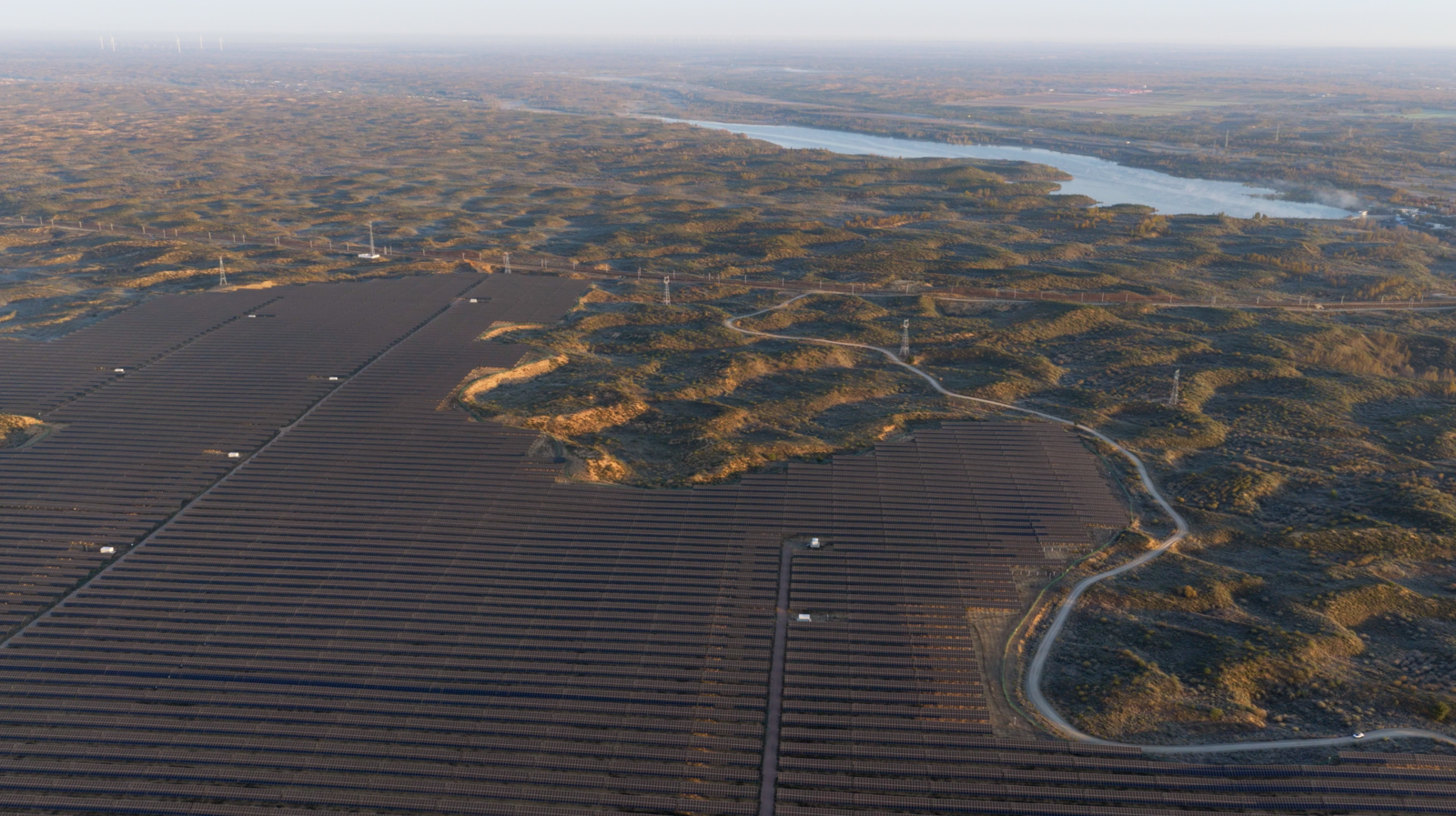
• Successful commissioning and stable operation: The 300MW photovoltaic power plant has been successfully grid-connected and is operating reliably in the Mu Us Desert. The fixed mounting solution provided by antaisolar has effectively overcome the challenges of harsh wind and sand conditions, laying a solid foundation for long-term safe operation.
• Dual benefits of energy generation and ecological restoration: The project delivers substantial annual clean electricity to the grid, significantly reducing standard coal consumption and CO₂ emissions, with strong economic performance. More importantly, through the “power generation above, restoration below” model, the PV arrays reduce near-surface wind speed and moisture evaporation, creating favorable conditions for vegetation recovery and achieving green value enhancement of desert land.
For more information, please visit: https://www.antaisolar.com/
Contact us: sales@antaisolar.com
•Project Background:Located in Shaanxi Province, at the southern edge of the Mu Us Desert, this project is invested in and developed by Beiyuan Group. It is a benchmark project responding to China’s national strategy of promoting “PV + ecological restoration” in northwestern regions. Through the construction of a large-scale photovoltaic power plant, the project explores and implements an integrated development model that combines clean energy generation, desertification control, and ecosystem restoration in ecologically fragile areas. It provides a replicable technical pathway for comprehensive “PV+” utilization in desert regions across China.
•Project Requirements:Situated in a typical desert environment, the client’s core requirement was to develop a large-scale PV power plant capable of long-term resistance to wind and sand erosion, stable operation under harsh climatic conditions, and simultaneous ecological restoration. Specifically, the PV mounting solution was required to: (1) Deliver exceptional wind and sand resistance and long-term structural durability under frequent sandstorm conditions. (2) Enable scientifically designed array spacing and elevation to support vegetation restoration beneath the modules, realizing the concept of “power generation above, ecological restoration below.” (3) Adapt to desert terrain while ensuring constructability, cost efficiency, and long-term reliability at utility scale.
2. Project Challenges2.1 Durability and Stability under Frequent Wind and Sand Exposure
• The Desert experiences frequent wind and sand activity, subjecting the PV mounting system to continuous abrasion and wind pressure. The system must therefore exhibit outstanding wind-load resistance and erosion durability to ensure structural safety and operational stability throughout its lifecycle.
2.2 Coordinated Ecological Restoration in a Fragile Environment
• As the site is ecologically vulnerable, PV development must not compromise environmental integrity. Instead, the power plant must function as a carrier for ecological restoration. This requires mounting designs that preserve adequate space and light conditions beneath the modules to support sand-fixing vegetation and sustainable land rehabilitation.
2.3 Engineering Adaptability to Sandy Geology and Extreme Climate
• Sandy soil foundations have relatively low bearing capacity and stability. In addition, the site must withstand a design wind pressure of 0.33 kN/m² and a snow load of 0.24 kN/m². The mounting system and foundation must therefore demonstrate strong adaptability to desert terrain, uneven settlement, and extreme meteorological loads.
3. SolutionAntaisolar delivered a customized, integrated solution centered on the ALTIMA-GROUND ST PHC fixed mounting system, focusing on wind resistance, sand stabilization, ecological synergy, and long-term reliability.
3.1 Wind and Sand Mitigation: Reinforced Structural and Durability Design
• Robust foundation: The project adopts PHC prestressed precast concrete pipe piles as foundations. With deep embedment in sandy soil, these piles provide strong anchorage and uplift resistance, ensuring overall structural stability at the foundation level.
• Reinforced connections: A dual-clam p connection system is used between the columns and PHC piles. This design offers high structural integrity while enabling convenient vertical height adjustment, effectively compensating for potential elevation deviations during desert construction and ensuring installation accuracy and system rigidity.
• High-strength structure: The upper mounting structure is fabricated from high-strength structural steel and reinforced according to site-specific wind and snow loads, ensuring safety under extreme weather conditions.
3.2 Ecological Restoration: Refined Spatial and Layout Design
• Optimized ground clearance: The minimum module clearance is uniformly set at 2.0 meters above ground. This height ensures effective ventilation and heat dissipation beneath the array to optimize module performance, while providing ample space for planting drought-resistant shrubs and grasses to support sand fixation.
• Scientifically selected tilt angle: Modules are installed at a 31° fixed tilt angle, maximizing solar energy capture. At the same time, the resulting shading effect reduces surface moisture evaporation, improves the microclimate beneath the array, and promotes vegetation growth and ecological recovery.
3.3 Desert Engineering Adaptability: High-Compatibility and High-Reliability System
• Terrain adaptability: The combination of PHC pile foundations and adjustable dual-clamp connections allows the system to adapt effectively to minor terrain undulations, minimizing large-scale land leveling and preserving the native desert surface.
• Long-term durability: All metallic components undergo enhanced anti-corrosion treatment, such as hot-dip galvanization, to resist sand abrasion and material aging in arid desert climates, ensuring a service life.
4. Project Results
• Successful commissioning and stable operation: The 300MW photovoltaic power plant has been successfully grid-connected and is operating reliably in the Mu Us Desert. The fixed mounting solution provided by antaisolar has effectively overcome the challenges of harsh wind and sand conditions, laying a solid foundation for long-term safe operation.
• Dual benefits of energy generation and ecological restoration: The project delivers substantial annual clean electricity to the grid, significantly reducing standard coal consumption and CO₂ emissions, with strong economic performance. More importantly, through the “power generation above, restoration below” model, the PV arrays reduce near-surface wind speed and moisture evaporation, creating favorable conditions for vegetation recovery and achieving green value enhancement of desert land.
For more information, please visit: https://www.antaisolar.com/
Contact us: sales@antaisolar.com
Previous
150MW Industrial Plant Roof Mounting System | Gansu, China
Next
350MW Fishery–PV Tracking System | Hubei, China
RELATED NEWS